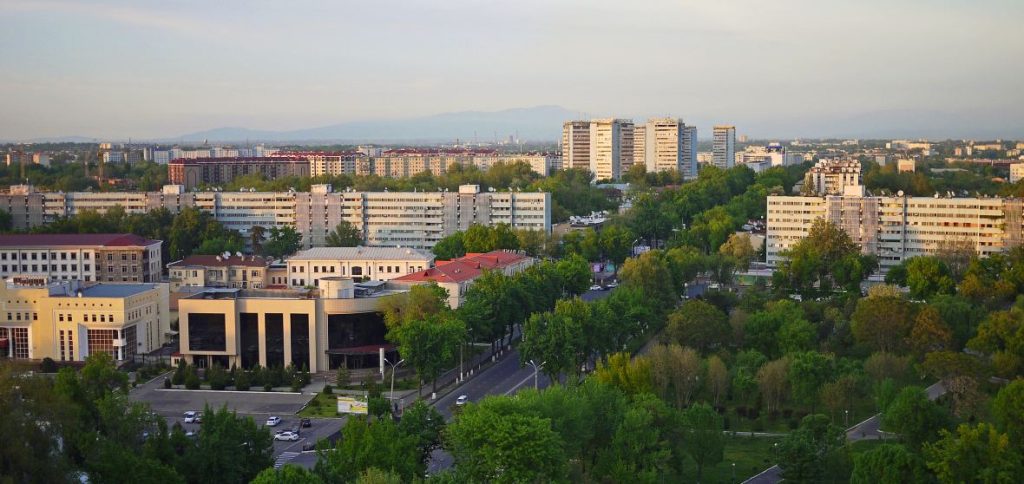
Uzbekistan has increased its GDP, exports, reserves, and reduced poverty. The country is also increasing the combat readiness of the army and strengthening the social support of military personnel. This week, the president announced key indicators in his address to parliament.
Uzbekistan has raised the level of combat readiness of the Armed Forces
The Senate heard information from the Ministry of Defense on the state of the Armed Forces and the conditions of service. As part of the reforms, the time for bringing troops to combat readiness has been reduced by 1.2 times, and a training system has been created based on the experience of armies from more than 10 countries. In 2025, 89.4% of citizens discharged into the reserve after completing their military service were employed. 385 apartments were provided to military personnel through preferential mortgages, and 178 official housing units. The Ministry of Defense has intensified its work with appeals — 3,157 requests were received in 11 months, most of which have been resolved or consulted. Since the launch of the call center, 857 appeals with a high level of operational resolution have been received in one month.
Fines for the eco-sticker system have been postponed until 2028
The Ecology Committee announced that fines for violating the environmental sticker system will only be applied starting in 2028. Sanctions are not provided for in 2026, and information about fines from the new year has been refuted. The environmental category of the car is determined by the “Euro” standards, fuel type, and manufacturer’s class. Stickers are issued by the traffic police during vehicle registration and are valid indefinitely. Diagnostic centers will operate in all regions. In the near future, the focus is on preparing drivers and vehicles for new requirements.
The authorities increased attention to food prices before the New Year
The Committee for the Development of Competition warned large retail chains about the need to maintain stable prices for products before the New Year. Notifications have been sent to the Korzinka, Makro, Havas, Baraka, Magnum, Assorti, B1, and Magnit networks. The measures are related to the increase in demand for socially significant goods during the holidays. The regulator expects to prevent unjustified price increases. Retail chains were advised to work with suppliers in advance and inform them about the risks of price changes.
For brokers and investment consultants, a minimum capital of 3000 BCV will be introduced
The President approved the indefinite “regulatory sandbox” regime and new rules for licensing professional securities market participants. Companies must bring the authorized capital and parameters into compliance with the requirements by July 1, 2026. The minimum capital will increase gradually: from 2026 to 3000 BCV, from 2027 to 4000 BCV, and from 2028 to 6000 BCV. The requirements for managers, financial stability, and technology of companies have been strengthened. Licensing norms will begin to be applied from July 1, 2026. The capital market is transitioning to a more standardized and controlled work model.
Uzbekistan will formalize the status of environmentally clean areas
The deputies adopted in the second reading a draft law defining the status of ecologically clean territories and restrictions on their use. Construction and operation of facilities that have a negative impact on nature are prohibited in such territories. Restrictions are being introduced on the circulation of disposable plastic products, except for products made of natural polymers. Business entities will have to comply with special environmental requirements. The document has been sent to the Senate for further consideration.
Businesses in Uzbekistan have been granted a customs payment deferral
The President approved the simplification of customs administration, including increasing the deferral of customs duties to 120 days and redistributing functions between agencies. Part of the customs control at individual points is transferred to the Border Troops, and customs officers are transferred to more loaded posts. Six remote electronic declaration posts are being closed with the redistribution of personnel. Border guards will report violations and participate in inspections as part of the experiment until the end of 2026. The innovations are aimed at reducing business costs and increasing the effectiveness of border control.
Japan will allocate over $2.3 million to improve the blood system in Uzbekistan
Uzbekistan and Japan agreed to provide 360 million yen in gratuitous aid to equip blood centers with modern equipment. Equipment will be provided to 14 regional blood centers and 3 transfusion stations at republican clinics. The project is aimed at meeting the growing need for donor blood and increasing the share of drugs from voluntary donors. The new equipment will improve logistics and blood storage conditions, and enhance the reliability of medical care.
A design code for construction and public spaces has been approved in Tashkent
The Tashkent city administration has prepared a design code and will submit the document for public discussion through the regulation.gov.uz platform. The normative act establishes uniform rules for the external appearance of buildings and public spaces. Regulation encompasses architecture, signage, landscaping, street elements, and preserving the historical environment. A special regime for the use of territories is provided for tourist streets. The design code was developed with the participation of international partners and is aimed at creating a holistic urban environment.
Uzbekistan’s economy has crossed the $145 billion mark: investments have reached historical highs
The President summarized the economic results of the year, noting the growth of GDP to $145 billion and the increase in exports by 23% to $33.4 billion. Foreign investments reached $43.1 billion, and reserves exceeded $60 billion. The sovereign rating has been raised to “BB”, which reduces borrowing costs. The unemployment rate decreased to 4.9%, poverty — to 5.8%. The country has improved its position in international rankings and expanded social support measures.
The President announced Uzbekistan’s plans for space
Uzbekistan has begun preparing its first cosmonaut and working on launching a national satellite. The country is strengthening IT infrastructure, including the creation of four data centers, two supercomputers, and AI laboratories. IT service exports are planned to reach $5 billion by 2030. The Center for Digital Technologies for the Development of Quantum Systems, Drones, and Robotics is being launched. More than 100 AI projects are being implemented in key sectors of the economy and the social sphere.
Resident permits for night parking have been approved in Tashkent
Resident agreements for the use of paid parking in residential areas have been approved in Tashkent. The permit will be issued to residents of mahallas located in or near paid parking areas and tied to one vehicle. The annual payment is 1 BCA, parking at night from 20:00 to 08:00 remains free. No more than two permits can be issued for one housing, the validity period is one year with the possibility of extension. The new procedure is recorded in the electronic registry and is aimed at protecting the interests of local car owners.
A new social support measure is being introduced in Uzbekistan: fewer benefits — more self-employment
The President approved the social support reform, launching a unified Social Registry from February 1, 2026, and dividing families into three categories based on income levels. Benefits for those in need will depend on work activity: the poor will be given 6 months for official employment. For families with state support, subsidies of up to 100 BCV and preferential loans of up to 75 BCV are being introduced to create income. The amount of payments for families “in the poverty line” is reduced to 75% or 50% depending on income. The reform is aimed at targeted support and stimulation of self-employment.