Why is this important
Uzbekistan is launching a large-scale reform of its food safety system while simultaneously strengthening support for livestock farming. The authorities aim to reduce bureaucracy for businesses, accelerate export procedures, and bring product quality control in line with international standards. Particular emphasis is being placed on increasing agricultural exports, expanding processing capacities, and boosting domestic meat and dairy production.
What happened
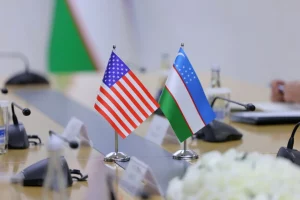
- Shavkat Mirziyoyev held a meeting on reforming the food safety system and developing the livestock sector.
- During the discussion, it was decided to establish a unified Food Safety Committee that will combine sanitary, veterinary, and quarantine control functions under the principle of “from field to table”.
- The authorities also announced the launch of new livestock support measures, the expansion of concessional lending, and the transfer of some state functions to the private sector.
- It was noted during the meeting that the current control system is divided among several agencies, causing entrepreneurs to face duplicated procedures and additional difficulties during the export and import of products.
- The authorities intend to transition the system to international control standards and introduce digital monitoring of product safety.
Numbers and facts
- Uzbekistan has 4 million hectares of cultivated land, storage facilities with a capacity of 1.5 million tons, and processing capacities totaling 3.5 million tons.
- Food product exports currently amount to around $4 billion, and by 2030 the authorities plan to increase this figure to $10 billion and expand export geography by another 100 countries.
- The authorities reported that the Plant Quarantine Agency system currently includes 100 tasks and functions, the Veterinary Development Committee has 115, and the sanitary and epidemiological supervision system has 44. At the same time, a unified product traceability system has not yet been established.
- The European Union has issued 25 warnings related to pesticide residues in Uzbek products.
- In this regard, the authorities intend to completely revise the food safety control system.
- A Food Safety Committee will be established based on the Plant Quarantine and Protection Agency, the Veterinary Development Committee, and the relevant branch of the sanitary and epidemiological system.
- Under the new model, mandatory food product certification will be abolished and replaced with a risk assessment-based control system.
- Currently, the risk-oriented approach is applied to only 1.6 thousand out of 80 thousand facilities across the country, which amounts to about 2 percent. In the future, the authorities will introduce an electronic rapid alert system for dangerous products and their withdrawal from the market.
- Starting January 1, 2029, exports of fruit and vegetable products will be carried out exclusively through agro-logistics centers.
- By 2028, international risk analysis standards and Codex Alimentarius norms are planned to be implemented at 20 percent of large food enterprises, by 2030 at 60 percent, and by 2032 at 100 percent.
- Beginning in 2027, six state functions, including laboratory testing, animal vaccination, disinfection, and identification, will be gradually transferred to the private sector. Regional governors have been instructed to establish at least two private laboratories and veterinary clinics in each region.
- By March 1, 2027, a unified automated information platform for food safety integrated with the border control “single window” system will become operational.
- Import control times will be reduced from 9 days to 2 days, and export controls from 3 days to 1 day. Entrepreneurs are expected to save around 70 billion soums in storage costs.
- To develop livestock farming, an Agency for Livestock and Pasture Development will be established under the Ministry of Agriculture.
- The agency has been tasked with increasing the cattle population to 16.5 million head, sheep and goats to 30 million head, and poultry to 141 million head. It is also planned to increase the meat and dairy processing rate to 50 percent and expand fodder crop areas by 1.5 times.
- In specialized districts, up to 50 percent of cotton and grain cultivation areas will be allowed to be used for fodder crops. Preferential loans at an annual rate of 10 percent will be provided for these purposes.
- By the end of the year, the authorities plan to organize the breeding of 2 million head of cattle on the lands of 28,746 farms. Starting June 1, banks will begin issuing loans for up to 10 years at an annual rate of 10 percent with a 4-year grace period.
- Importers of pedigree livestock will be exempt from VAT until 2029. Banks will allocate resources totaling 1 trillion soums and $50 million at an annual rate of 6 percent. Using these funds, 1,500 projects worth 5.5 trillion soums are planned to be implemented in 2026, creating 25,000 jobs and increasing the cattle population by 400,000 head.
- Starting June 1, 10-day artificial insemination courses will be launched at agricultural universities. The authorities plan to train at least 1,000 specialists annually and provide them with equipment free of charge.
- Subsidies of 500,000 and 700,000 soums respectively will be provided for each pedigree calf obtained through artificial insemination and embryo transfer methods. An additional 50 billion soums will be allocated for these purposes.
Context
- For agribusinesses, this means a transition to a more centralized and digital control system with fewer inspections and bureaucratic procedures.
- Exporters will be able to pass inspections more quickly and reduce costs when supplying products abroad.
- Farmers and livestock enterprises will gain access to new preferential loans, subsidies, and support programs related to the development of pedigree livestock and fodder resources.
- Farmers and livestock enterprises will gain access to new preferential loans, subsidies, and support programs related to the development of pedigree livestock and fodder resources.