Why is this important
The transition from experimental robotics to the widespread use of humanoid robots in factories can radically change industrial production. The automotive industry is becoming one of the first industries where AI and robotics are beginning to replace humans not only in simple but also in complex assembly operations. For Hyundai, this is a strategic step that affects not only production efficiency but also the company’s competitiveness in the long term.
What happened
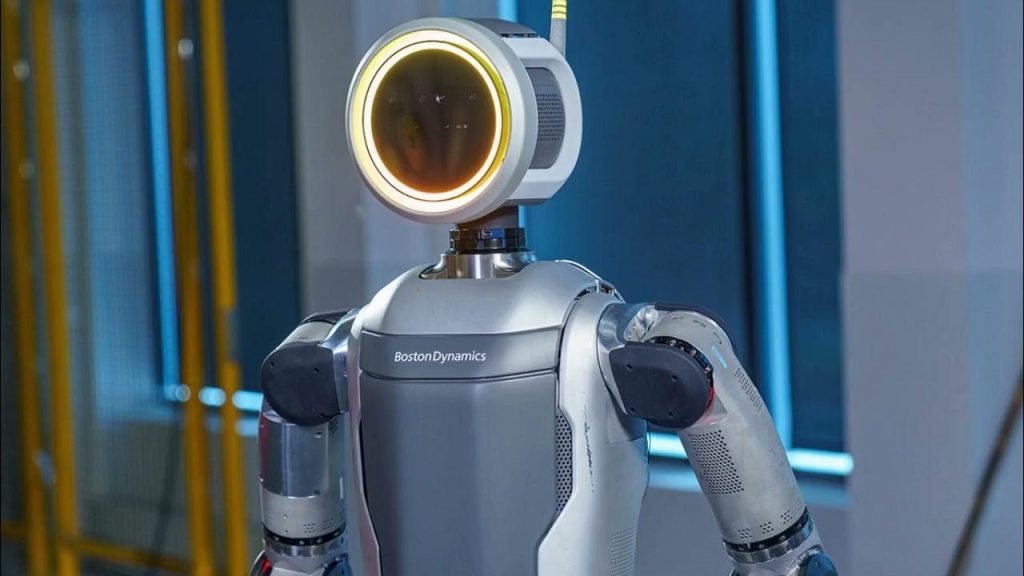
- The Boston Dynamics division, owned by Hyundai Motor, presented an updated version of the Atlas humanoid robot, designed for use in the automaker’s production facilities.
- The use of the robot at Hyundai plants is planned to begin in 2028, including at the company’s enterprise in Savannah (Georgia).
- In the first stage, Atlas will be involved in performing highly repetitive operations, including sorting and laying components in the order they are installed in vehicles.
- By 2030, Hyundai plans to expand the robot’s functionality and allow it to perform more complex assembly work.
- The updated version of Atlas is equipped with human-sized hands with tactile sensitivity and fully rotating joints capable of lifting loads up to 50 kg and working at temperatures from −20°C to −40°C.
Numbers and facts
- The start of the use of Atlas humanoid robots at Hyundai plants is planned for 2028.
- The transition to more complex assembly operations is expected by 2030.
- The Atlas robot’s load capacity is up to 50 kg.
- The planned production volumes at the new plant in the USA are up to 30,000 robots per year.
- Hyundai Motor shares rose by 8.4% and reached a record high at the early auction in Seoul.
- Hyundai plans to invest 125 trillion won (about $86 billion) in South Korea over five years in AI, robotics, and new technologies.
- Additional investments in the US until 2028 will amount to $26 billion.
- В октябре Hyundai и Nvidia подписали соглашение о создании в Южной Корее физического ИИ-кластера стоимостью 3 млрд долларов.
- Goldman Sachs forecasts that the human-like robotics market will grow to $38 billion by 2035, and Morgan Stanley to $5 trillion by 2050, with the potential use of more than 1 billion such robots.
Context
- Hyundai is focusing on the large-scale implementation of humanoid robots as a key element of “physical AI.” Using Atlas in real production lines means moving from demonstrating capabilities to industrial operation.
- If successful, the company can gain significant advantages by reducing costs, improving labor safety, and creating a new business direction.
- The development of generative AI accelerates the transition of robots from simple tasks to complex operations, forming a new stage of industrial automation.