Why is this important
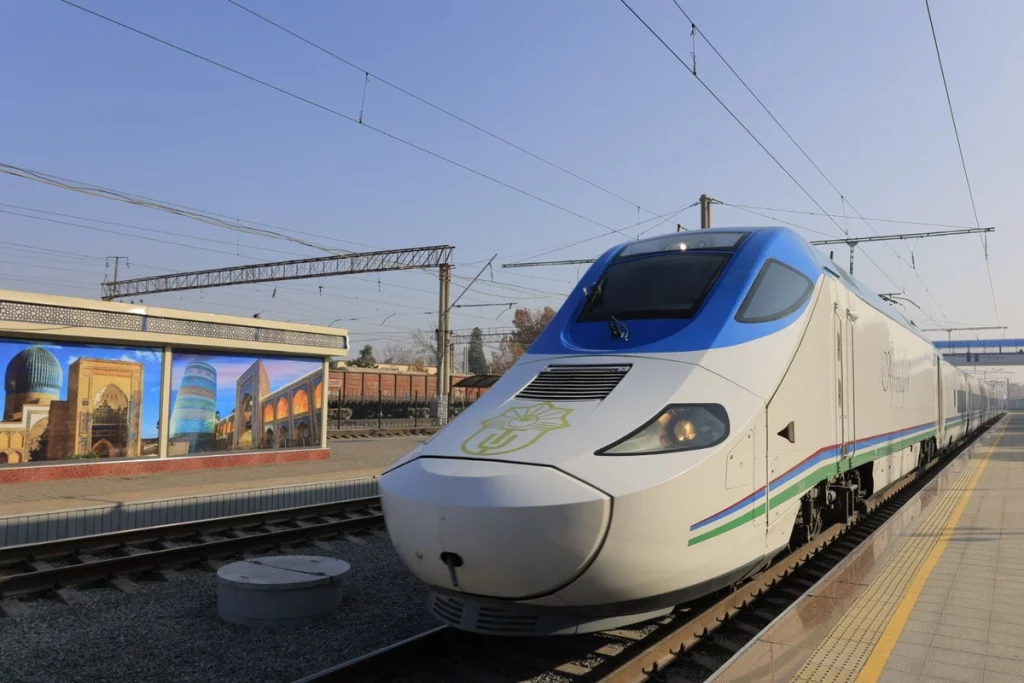
The Tashkent—Samarkand high-speed highway project can significantly reduce travel time between the country’s largest cities, increase business activity, and give impetus to the development of transport infrastructure. The participation of a large Russian infrastructure holding may accelerate the development of the Tashkent-Samarkand high-speed line project, attract investments and modern technologies to the railway industry of Uzbekistan.
What happened
- The Russian company NPC has expressed interest in participating in the project for the construction of the Tashkent—Samarkand high-speed railway.
- Shavkat Mirziyoyev received the Russian delegation headed by the First Vice Prime Minister of the Russian Federation Denis Manturov.
- The parties discussed the implementation of the agreements reached at the highest level based on the “roadmap”.
- The steady growth of trade turnover and the implementation of projects in industry, energy, transport, metallurgy, chemistry, and other sectors were noted.
- The need for coordinated measures to maintain the positive dynamics of trade, accelerate cooperation projects, and intensify regional and business interaction was emphasized.
Numbers and facts
- The heads of leading Russian companies presented to the President plans for projects in IT, energy, electrical engineering, mechanical engineering, chemistry, pharmaceuticals, textiles, and the food industry.
- Alexey Krapivin reported that “National Project Construction” is already participating in the development of the railway network and the automation of the Tashkent metro.
- The President was also presented with plans to localize the production of train traffic control systems, launched in August of this year at the Chirchik Technopark.
- The company expressed interest in further modernizing Uzbekistan’s railways.
Context
- Uzbekistan has been actively expanding its transport infrastructure, including railways and urban transport, in recent years.
- High-speed railway projects are considered as a key element of regional integration and tourism development.