Why is this important
The launch of new high-speed trains expands transport connectivity between regions and makes long-distance trips within the country faster and more convenient. The reduction of travel time between Tashkent and Khiva by almost two times increases the attractiveness of domestic tourism and business mobility. In addition, the project means transferring technologies, training local specialists, and modernizing Uzbekistan’s railway infrastructure.
What happened
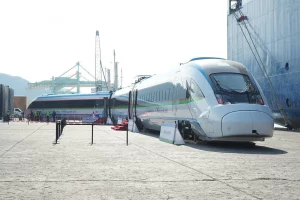
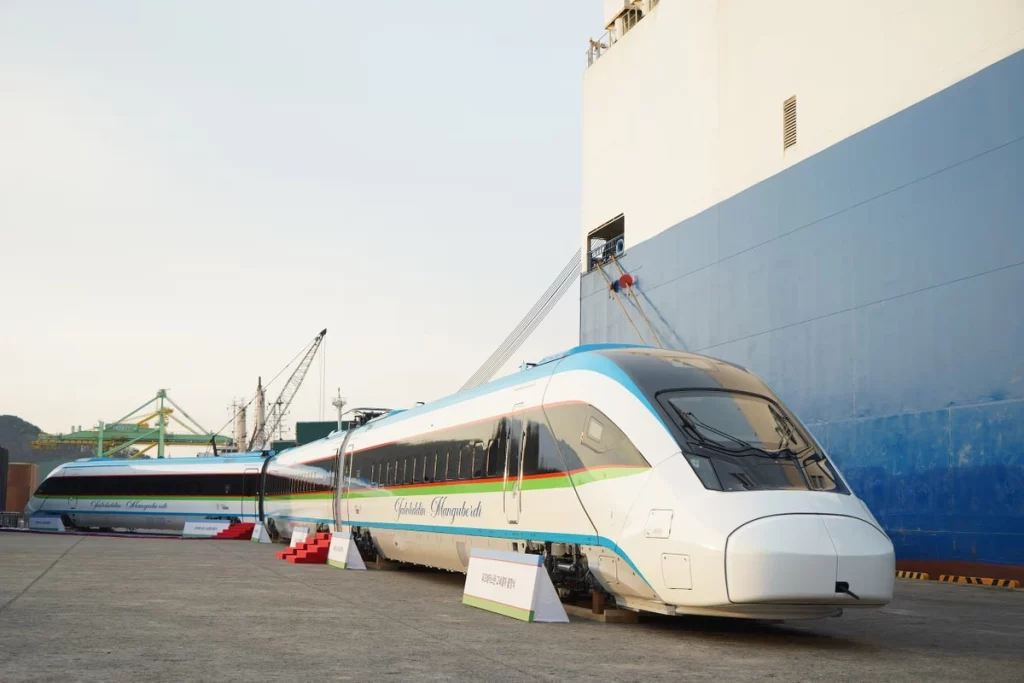
- On December 10, the South Korean company Hyundai Rotem sent the first batch of high-speed trains to Uzbekistan.
- The departure of the first train from the Masan port of Changwon city took place three months ahead of schedule.
- The first train, consisting of seven wagons, was produced in 17 months and is expected to arrive in Uzbekistan in January-February 2026.
- Upon arrival, the train will undergo three months of dynamic testing, and the first commercial flight is scheduled for the second quarter of 2026.
Numbers and facts
- New trains called “Jaloliddin Manguberdi” will run on the 1286-kilometer Tashkent—Khiva route.
- Travel time will be reduced from 14 to 7.5 hours, and the average speed will exceed 171 km/h.
- Each electric train consists of seven wagons — five economy class and two business class — and has a length of 175 meters.
- The maximum speed of the trains is 250 km/h, and the total capacity is 389 passenger seats.
- Hyundai Rotem trains are shorter but more spacious than Afrosiyob trains.
- The compositions are adapted to the climatic conditions of Uzbekistan and are capable of operating at temperatures between −40 and +50 degrees Celsius.
Context
- The launch of high-speed communication between Tashkent and Khiva significantly increases the transport accessibility of the country’s western regions and makes travel between key cities more competitive compared to air and road transport.
- The reduction of travel time by almost half creates conditions for the growth of domestic tourism, as well as business and interregional connections.
- The adaptation of trains to extreme climatic conditions and the training of Uzbek specialists indicate the long-term nature of the project and the gradual strengthening of our own expertise in the field of high-speed railway operation.